STORE
NONCLSS005
G. Prokofiev – Concerto for Turntables and Orchestra
Heritage Orchestra Feat. DJ Yoda
Conceptualised nearly 7 years ago, the Concerto for Turntables & Orchestra is the brainchild of Will Dutta (Chimera Productions), borne out of a passion for two seemingly disparate strands of music; hip hop and classical. With the benefit of 5 years spent at Trinity College of Music, Will came to see that throughout the rich history of western classical music there has always been a cross-pollination of sound between art music and folk/dance idioms; be it in the Partitas and Suites of J S Bach or Bartók’s in-depth study of folk song. Concerto for Turntables & Orchestra acknowledges and builds on this tradition, drawing on hip hop – the 21st century’s most prolific sound – and more specifically its instrument of choice, the turntable.
Will’s first step was to approach Gabriel Prokofiev – grandson of Sergei Prokofiev – to oversee the composition. While Gabriel’s initial response was negative, he soon saw the artistic merit and, indeed, the necessity of the project, and decided that if anyone was to do it, it should be him so that he could treat it with the respect it deserves. Hip hop has sampled classical music many times in the past, so it would seem feasible that the reverse should be possible, and given the rather diverse nature of urban music’s coolest “instrument”, the stage was set for a rather interesting experiment.
NONCLSS004

Cortical Song
John Matthias and Nick Ryan
Nonclassical’s fourth release is something rather special indeed. After early details leaked last week, Nonclassical can confirm that John Matthias and Nick Ryan’s Cortical Songs project is set for release on the 23rd June.
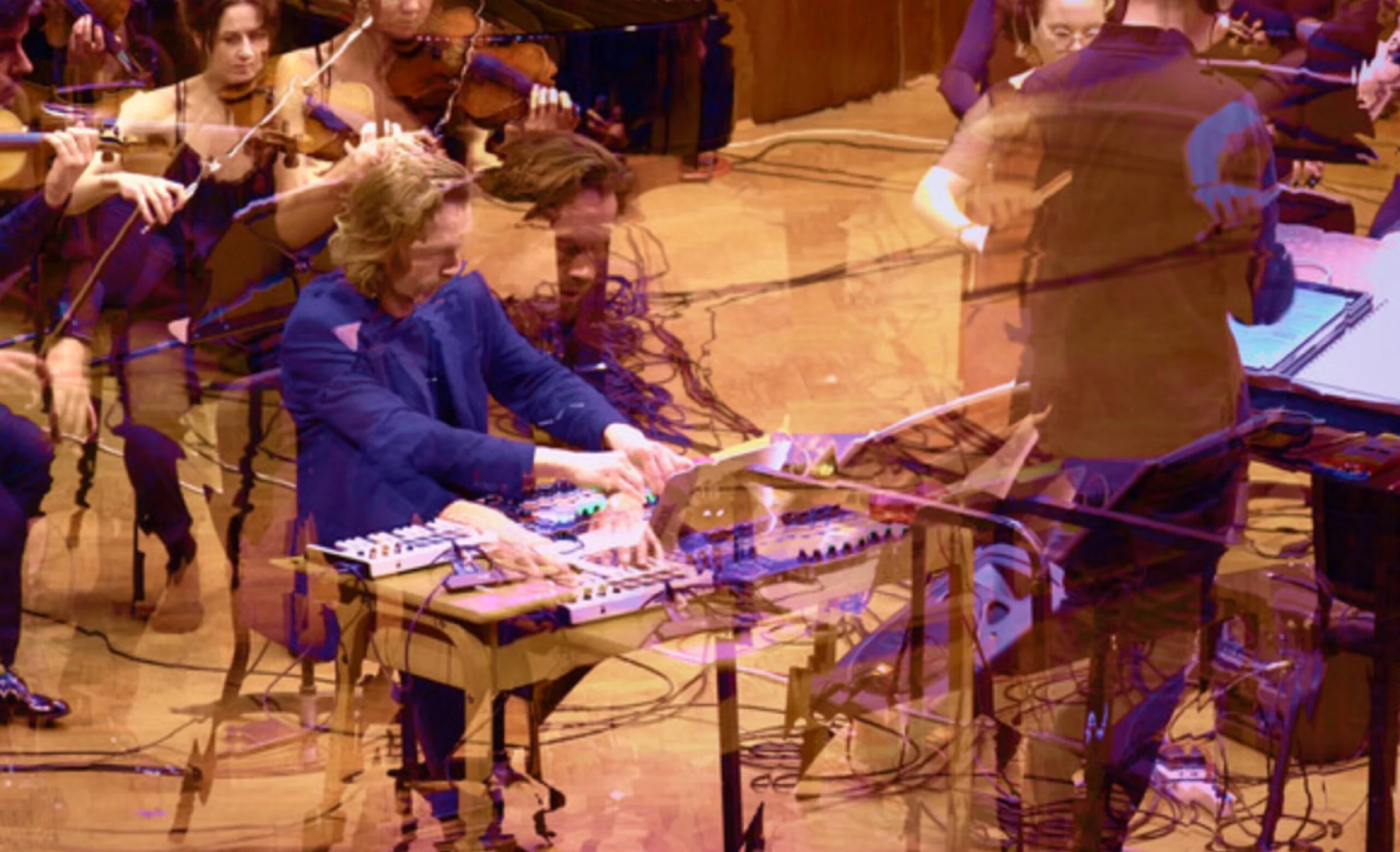
Cortical Songs is a work in four movements for string ensemble and solo violin written by John Matthias and Nick Ryan in which the orchestra is partially controlled by a tiny computer brain. Cortical Songs features the String Ensemble of Trinity College of Music, conducted by Nic Pendlebury with the solo violin played by John Matthias and live interactive programming by Nick Ryan.
The Cortical Songs album includes remixes of the four movements by Thom Yorke, Simon Tong (Gorillaz / The Good The Bad & The Queen), Simon Jones & Nick McCabe (The Verve), John Maclean (The Beta Band / The Aliens), and Gabriel Prokofiev, with further remixers to be added in the coming weeks. This is set to be one of the most unique and fascinating releases of the year.
NONCLSS003
G. Prokofiev – String Quartet No 2
The Elysian Quartet
Gabriel Prokofiev continues his journey of taking much of his musical inspiration from electronic dance music and placing that in a classical contemporary context, with a respectful nod to older classical traditions: Alberti bass head-to-head with house, hi-hat patterns and techno blips. But this is nothing new – Bartok and Mozart took inspiration from the popular folk music of their time… Classical music can and should have a connection within the world it has been conceived.
The 1st Movement is heavily influenced by Techno and its repetitive nature, but the expected regular patterns have been abstracted and taken to a highly syncopated, erratic level.
The 2nd has a driving groove that boasts a quirky ‘Alberti’ bass pattern as its focus, played both as straight quavers and ’swung’; often against itself, and it is developed through various extended playing techniques in which the Elysian Quartet excel.
The 3rd has been nicknamed ‘Promenade dans les Bois’ by the composer’s girlfriend, and exudes calm with its lilting groove. This is the most ‘traditional’ movement of the quartet; but moments of uncertainty and dissonance keep it real.
The 4th is raw and punky, revealing the quartet’s rock ‘n’ roll nature – expect spikey violin stabs and a savage bassline to boot. In short, it’s Bartok on a night out on the tiles.
NONCLSS002
John Richards – Suite for Piano and Electronics
GéNIA
John Richards’ Suite for Piano and Electronics is a cacophony of feedback and sustained piano, along with melancholic and ’strained’ chords. The piece has two movements. Prelude is based on four chords and electronic sounds that seem to emerge from these chords. The overall effect is a sublime and very cool ‘classical’ piano work with hints of jazz and a Satie-esque piano style, but always with a very contemporary sound. The second movement, No. 2, is an incredibly powerful and intense exploration in sound that is probably best described as ‘classical noise music’. John Richards draws on his experiences playing in avant-punk outfit Sand and noise artists kREEPA to create an epic sonic journey that has way more attitude than any of the groups from the current so-called ‘new-punk’ revival.
NONCLSS001

G. Prokofiev – String Quartet No 1
The Elysian Quartet